
 MY basket
Rooflights are one of the most effective ways to bring natural light into a space, transforming kitchens, extensions, and living areas with a brighter, more open feel. But because they’re installed in the roof rather than a vertical wall, they come with additional safety considerations.
One of the most common questions is: do rooflights need special safety glass? The short answer is yes – rooflights should always use safety glass, and in many cases, it’s required to meet building regulations.
In this guide, we’ll explain why safety glass is important, the different types available, and what you should expect from a modern rooflight.
Why Safety Glass Is Important in Rooflights
Unlike standard windows, rooflights are installed overhead. That means the glass sits above occupants, often in areas where people spend a lot of time, such as kitchens or living spaces. Because of this, safety becomes a key priority.
If standard glass were to break in a rooflight, it could fall downwards, posing a risk of injury. Safety glass is designed specifically to reduce this risk by either holding together or breaking in a safer way.
That’s why modern rooflights are manufactured using specialist glazing designed for overhead applications.
What Is Safety Glass?
Safety glass is a type of glazing that has been specially treated to make it safer than standard glass when broken.
There are two main types used in rooflights:
- Toughened (tempered) glass
- Laminated glass
Each has different properties, and many rooflights use a combination of both.
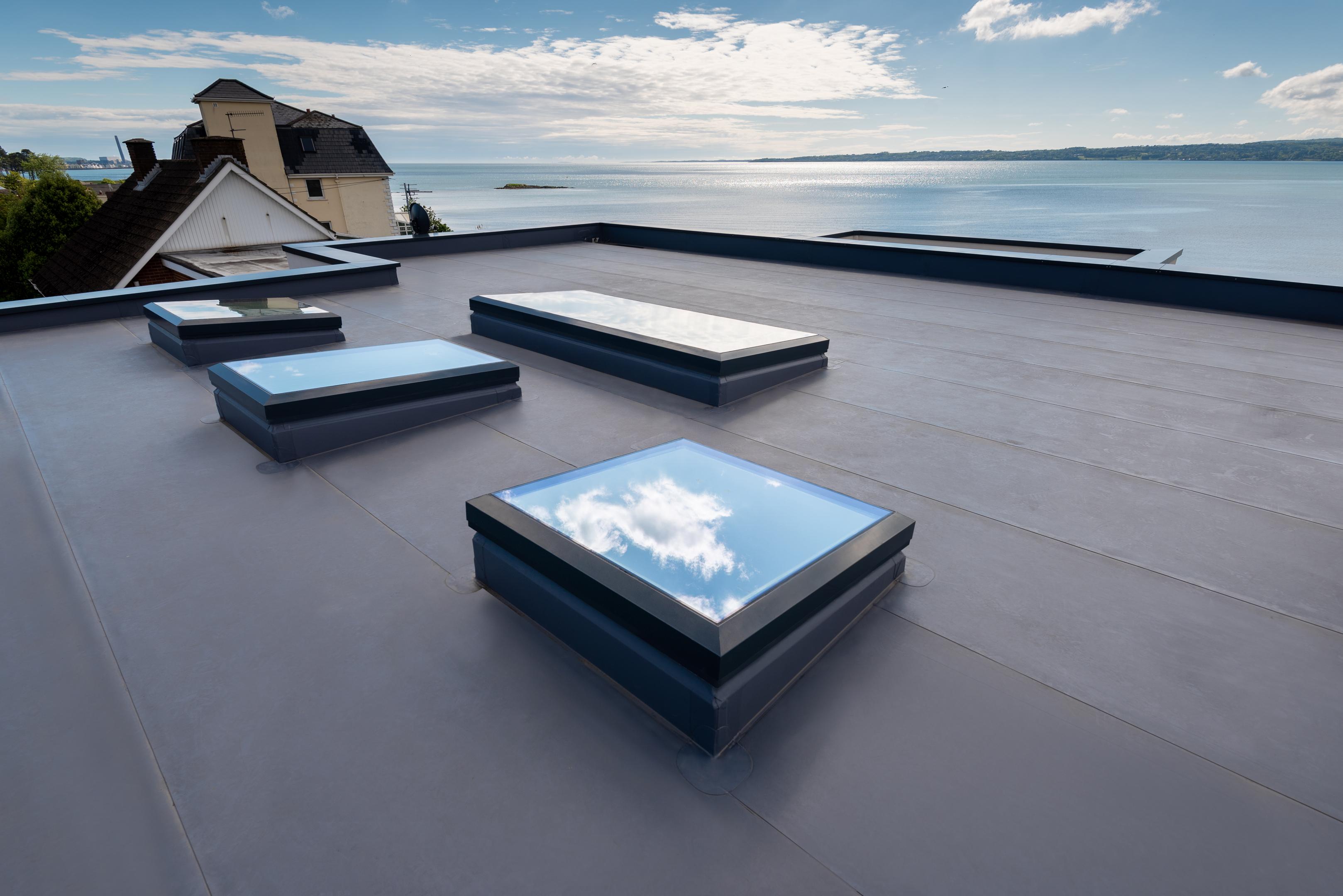
Toughened Glass Explained
Toughened glass is created by heating the glass to a high temperature and then rapidly cooling it. This process increases its strength compared to standard glass.
Key benefits of toughened glass include:
- Much stronger than regular glass
- Resistant to impact
- Breaks into small, blunt fragments rather than sharp shards
This makes it a popular choice for rooflights and other glazing applications where strength is important.
In our rooflights, toughened glass is used as standard, providing a solid level of durability and safety.
Laminated Glass Explained
Laminated glass consists of two panes of glass bonded together with a plastic interlayer.
If the glass breaks, the interlayer holds the pieces in place rather than allowing them to fall.
Benefits include:
- Prevents glass from falling if broken
- Improves safety in overhead applications
- Adds an extra layer of security
Because of these properties, laminated glass is often used on the internal pane of rooflights.
Do Rooflights Need Both Types?
In many cases, yes.
A typical high-quality rooflight will use:
- Toughened glass on the outer pane for strength and weather resistance
- Laminated glass on the inner pane for safety
This combination provides both durability and protection, ensuring the glass performs well in all conditions while remaining safe for occupants below.
What Do Building Regulations Say?
In the UK, Building Regulations require safety glazing in certain locations, including overhead glazing like rooflights.
Approved Document K (Protection from falling, collision and impact) states that glazing in critical areas must be safe in the event of breakage.
For rooflights, this generally means:
- The inner pane should prevent glass from falling into the room
- The glazing should be impact-resistant
This is why safety glass is not just recommended, it’s often essential for compliance.
Are All Rooflights Supplied with Safety Glass?
Most modern rooflights are designed with safety in mind and include safety glass as standard.
However, specifications can vary between products, so it’s always important to check what’s included.
At a minimum, you should expect:
- Toughened glass for strength
- Safety-focused glazing design
- Compliance with relevant standards
In many cases, toughened glass is supplied as standard, ensuring a durable and reliable solution straight out of the box.
Why Toughened Glass Is Used as Standard
Toughened glass offers an excellent balance between strength, safety, and practicality.
Because rooflights are exposed to the elements, they need to withstand:
- Wind loads
- Rain and debris
- Temperature changes
Toughened glass provides the strength needed to handle these conditions while also offering a safer break pattern if damage occurs.
What About Thermal Performance?
Safety glass doesn’t mean compromising on performance.
Modern rooflights combine safety glazing with:
- Double or triple glazing
- Low-E coatings
- Gas-filled units
- Warm edge spacers
This means you can achieve:
- Strong thermal performance
- Reduced heat loss
- Improved energy efficiency
All while maintaining the safety standards required for overhead glazing.
Are There Other Safety Considerations?
Yes – while glass is a key factor, overall rooflight safety also depends on:
- The frame system
- Installation quality
- Fixings and sealing
- Load-bearing capacity
A well-designed rooflight system takes all of these into account, ensuring the product performs safely and effectively over time.
What Happens If Safety Glass Breaks?
If toughened glass breaks, it shatters into small, blunt pieces that are less likely to cause injury.
If laminated glass breaks, the interlayer holds the glass together, preventing it from falling.
In both cases, the risk is significantly reduced compared to standard glass.
Do You Always Need Laminated Glass?
While toughened glass is often standard, laminated glass may be required depending on the application.
For overhead glazing, laminated glass is commonly used on the internal pane to meet safety requirements.
It’s always best to choose a specification that ensures compliance and provides peace of mind.
Choosing the Right Rooflight
When selecting a rooflight, safety should be a key consideration alongside design and performance.
Look for products that offer:
- Toughened glass as standard
- Optional or included laminated glass
- Compliance with building regulations
- High-quality sealed units
A well-specified rooflight will combine safety, efficiency, and aesthetics in one complete system.
So, Do Rooflights Need Special Safety Glass?
Yes – because of their position overhead, rooflights must use safety glazing to reduce the risk of injury in the event of breakage. Modern rooflights are designed with this in mind, typically using toughened glass as standard and often incorporating laminated glass for additional protection.
When choosing a rooflight, it’s important to look beyond appearance and consider how it’s built – because the right glass makes all the difference.
At Lantern Superstore, we supply high-quality rooflights designed with safety and performance in mind, including toughened glass as standard. Whether you’re planning a new installation or upgrading your space, our team can help you find the right solution. Get in touch today on sales@lanternsuperstore.co.uk to discuss your project.


